2020, Almuzara
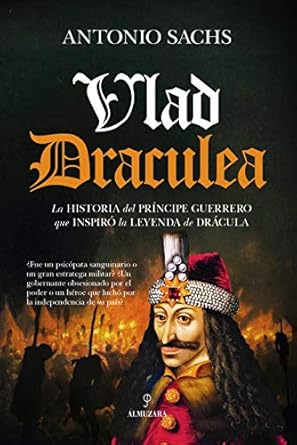
Vlad Draculea: Assassin, Swordsman, Archer, Soldier, Military Leader, Tyrant, Political Prisoner, Social Phenomenon, Boogeyman, Vampire…
The history and legend of the mythical warrior prince compete in their unique allure. Was he a bloodthirsty psychopath or a brilliant strategist? A ruler obsessed with power or a hero devoted to his country’s independence? And… to what extent did the Irishman Bram Stoker have accurate knowledge of his deeds before writing his iconic novel Dracula? What drew him to Vlad?
In Vlad Draculea, we witness the rise and fall of the Wallachian voivode commonly known as Vlad Tepes or Vlad the Impaler, whose draconian greed and unparalleled cunning allowed him to seize the turbulent throne of the principality of Wallachia several times—a borderland between East and West; one of the last bastions of the old feudal system in 15th-century Europe.
Vlad ruled his subjects with an iron fist, eliminated his enemies without mercy, instilled terror among the innocent, struck ruthlessly under the cover of night, burned entire villages, and employed innovative guerrilla tactics and psychological warfare to create his own particular hell on earth against the modern armies of his arch-nemesis, Sultan Mehmed II, the most powerful man of his time.
Vlad would be feared, hated, betrayed, slandered, and despised in equal measure by kings, sultans, nobles, historians, poets, vassals, and publishers of the era—thus forging the origin of this dark figure, caught halfway between myth and reality, whose shadow would survive the slow passage of centuries.
“Antonio Sachs has carried out patient research, offering new avenues that will leave you intrigued. Once again, Dracula rises from his grave, this time through the hand of a promising Spanish writer.” — Dacre Stoker
“Our author’s surname heralds stylistic and literary virtues.” — Luis Alberto de Cuenca